An estimated eight out of 10 people will be affected by a spine condition during their lifetime, making treatment options like spinal fusion surgery imperative. Spinal fusion is a surgical procedure in which vertebrae along the spinal column are fused and immobilized. The procedure can reduce back pain and help treat injuries or deformities.
In general, the procedure involves joining two or more vertebrae together using temporary stabilizing hardware (e.g., screws, rods) and bone graft material that provides additional support as the hardware inevitably loosens over time. Presently, inserting a bone graft is a highly invasive process, requiring pulling back the body tissue and laying the graft in by hand.
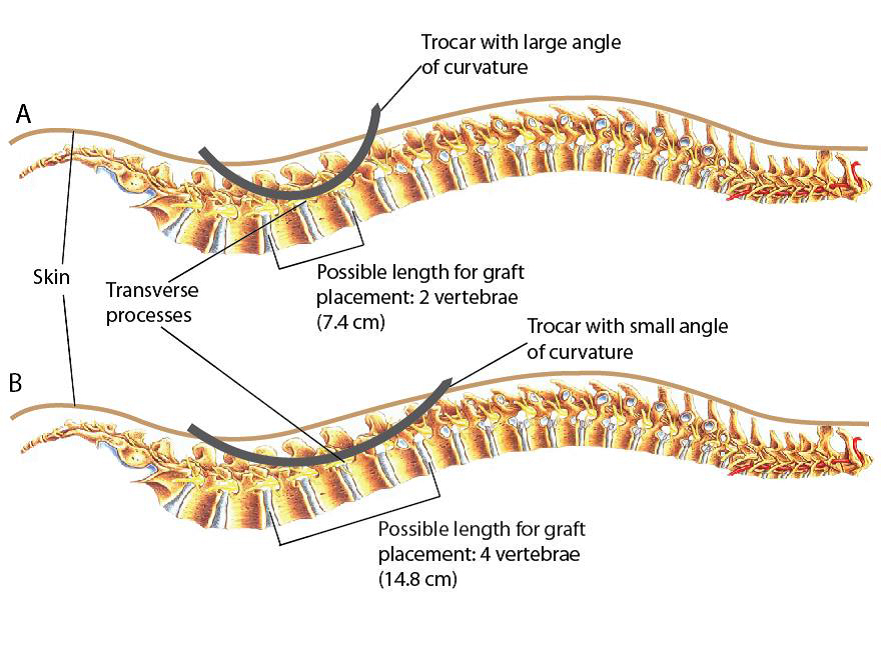
A less intrusive technique could ease patients’ pain, minimize scarring, shorten hospital stays and reduce healthcare costs. UW–Madison researchers have developed a method and surgical instrumentation to enable minimally invasive spinal fusion. In the procedure, a sharp pointed tube (a trocar) is inserted along the spine. Using the trocar as a guide, the bone graft material is pulled into place. The trocar is removed, releasing the graft in the desired location along the spine.
The Wisconsin Alumni Research Foundation (WARF) is seeking commercial partners interested in developing a less invasive method for delivering bone graft material to the spine of a patient.
Additional Information
Figure 1. The design includes retractors that will be placed on the transverse processes to allow decortication. The retractors have a horseshoe shape at the bottom to allow the curved trocar to fit through.
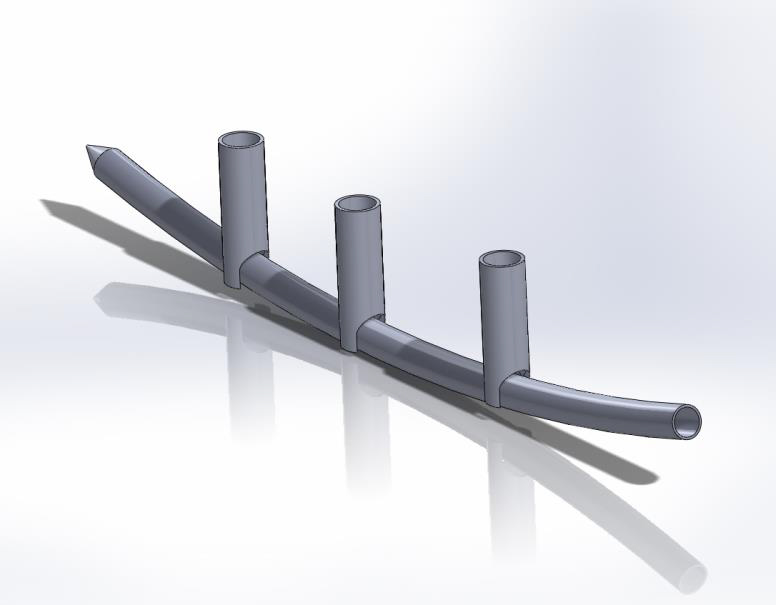
Figure 2. The placement of trocar along the spine.
 March 14, 2017





 B5, No.1600, North Guoquan Rd, Yangpu, Shanghai
 info@yintrust.com
 021-65679356
 Premium