Invention Summary
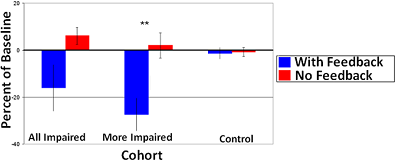
Grasping an object is one of the most fundamental activities of daily living. Unfortunately hand dexterity is usually impaired following stroke or traumatic brain injury. As anyone who has suffered a broken bone will attest, the lack of usage of the appendage leads to muscular atrophy. The lack of usage also tends to impede recovery; therefore, grasp training and usage of the muscle groups is a high priority for rehabilitation of the upper limbs.Researchers at Rutgers University have developed a rehabilitation device for improving fine motor function in persons with brain injury. The Gesture Recognition Biofeedback (GRB) system reads and uses surface muscle pressures of the forearm to provide real-time visual biofeedback. Although some reports question the results of using Electromyography (EMG) biofeedback, many other studies have documented the efficacy of EMG biofeedback. Biofeedback from the EMGs of various muscles in the wrist and hand were shown to improve the wrist and finger extension of stroke subjects. This novel GRB biofeedback modality provides visual feedback that relays the accuracy of specific gestures rather than specific muscular activation amplitudes, and uses a simpler interface than the traditional systems. GRB was shown to be effective for short-term improvement of fine motor function of 12 impaired participants, reducing their average time to complete the Human Performance Technology by 16.1% ± 6.98%.
 July 13, 2013
 Invention Summary




 B5, No.1600, North Guoquan Rd, Yangpu, Shanghai
 info@yintrust.com
 021-65679356
 Premium